Safety
The Dryer Vent Safety Guide
Clean It. Check It. Protect Your Home.
The problem it solves
Your dryer takes two cycles to dry a load and you have never cleaned anything past the lint screen.
How to recognise restricted airflow, inspect the duct, clean it safely with the right tools, and know exactly when the job belongs to a professional.
Who it's for
Any homeowner or renter with a clothes dryer.
What you'll get out of it
- Spot restricted airflow before it costs you a dryer
- Clean the full duct run properly, not just the screen
- Know the exact signs that mean stop and call a pro
- A maintenance schedule you can keep
Table of contents
- 1. Why dryer vents matter
- 2. Warning signs of restricted airflow
- 3. Where lint actually collects
- 4. Reading your dryer's performance
- 5. Inspecting the duct
- 6. Preparing to clean safely
- 7. The cleaning pass
- 8. Tools you need
- 9. When NOT to DIY
- 10. Signs you need professional service
- 11. Maintenance schedule
- 12. Common mistakes
- 13. Printable checklist
Sample pages
Warning signs of restricted airflow
Any one of these means the duct needs attention:
- Clothes are still damp after a full cycle, or need a second cycle.
- The dryer or the clothes are unusually hot at the end of a cycle.
- The laundry room gets humid or smells musty while the dryer runs.
- Little or no air movement at the exterior hood with the dryer running.
- Lint visible around the hood, or the hood flap that never opens.
- Cycle times have quietly got longer over the last year.
Airflow is the whole job. Everything a dryer does depends on moving hot, moist air out of the house. When that air cannot leave, the appliance works harder, runs hotter and wears out sooner — and hot lint in a restricted duct is a hazard you can simply remove.
Tool of the Day
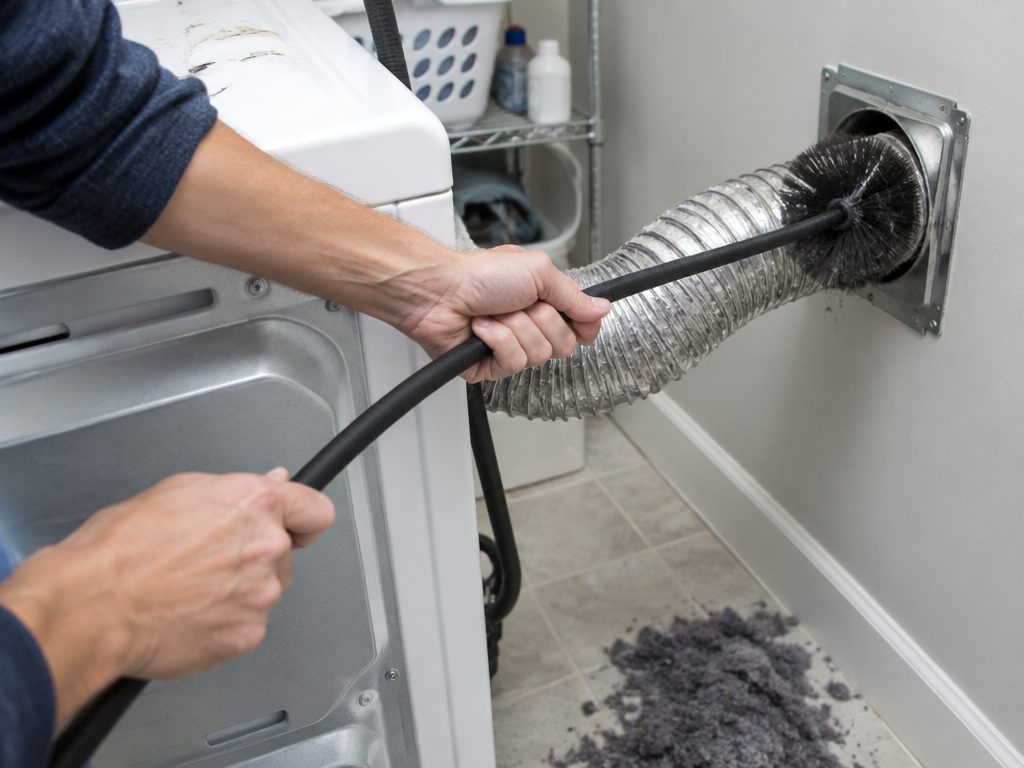
Dryer vent cleaning brush kit
Today's practical pick for your home maintenance checklist.
A flexible rod-and-brush kit that reaches the lint a vacuum hose can't.
- Category
- Appliance maintenance
- Use level
- Beginner
- Kit tier
- Essential
Why it matters: Lint collects in the duct, not just the lint screen. A restricted vent makes the dryer run long, run hot and wear out early — and it is a fire hazard you can remove yourself in under an hour.
One tool. One problem. One smarter next step.
Affiliate link — Xiane Homes may earn a commission from qualifying purchases.